Narrow stairs in Hayes flats? Safe moving solutions
Posted on 18/06/2026
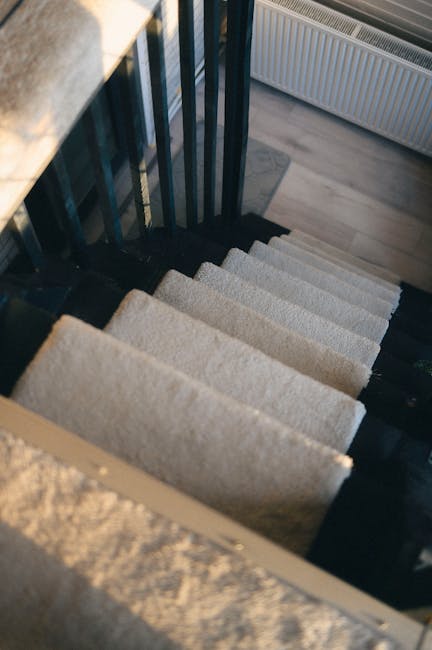
If you have ever stood at the bottom of a tight stairwell in a Hayes flat, looking at a sofa, bed frame, or washing machine and thinking, "That is not going up there," you are not alone. Narrow stairs in Hayes flats can turn even a simple move into a slow, awkward, and sometimes risky job. The good news is that there are safe moving solutions that make the process much more controlled, far less stressful, and a lot less likely to end with scraped walls or sore backs.
This guide explains what makes these moves tricky, how professionals approach them, what to do before moving day, and when it is wiser to bring in help. It also covers practical planning tips for flat moves, bulky furniture, and awkward access, all with a local Hayes lens. If you are trying to avoid a messy lift-turn-rotate-repeat moment on the stairwell landing, you are in the right place.
Why Narrow stairs in Hayes flats? Safe moving solutions Matters
Narrow staircases are more than a mild inconvenience. In a flat, they often determine whether a piece of furniture can be moved safely at all. The issues show up quickly: a hallway that pinches in at the turn, a steep flight with low headroom, banisters that get in the way, or a landing so small that two people can barely pass each other. Add an overconfident lift and suddenly the wall gets clipped, the item twists, or someone loses balance for a split second. That split second matters.
In Hayes, flats often come with compact internal access, shared hallways, or awkward stair geometry. That means a move needs more than muscle. It needs planning, the right lifting technique, and a realistic understanding of what can safely pass through the space. To be fair, a lot of moving damage happens not because something is especially heavy, but because it is just awkward. The shape is the problem.
There is also a people-side to this. Residents, neighbours, landlords, and managing agents all tend to notice when a move becomes noisy, slow, and disruptive. A careful approach reduces stress for everyone. And if you are trying to protect deposits, avoid complaints, or simply keep the day from going sideways, safer access planning is not optional. It is the move.
For many readers, the real question is simple: how do you get bulky items down or up a narrow staircase without making a bad situation worse? The answer starts with measuring, stripping items down where possible, and deciding early whether the staircase is suitable or whether another method is smarter.
How Narrow stairs in Hayes flats? Safe moving solutions Works
Safe moving in a tight stairwell usually follows a fairly consistent pattern. First, the team assesses the route. That means checking stair width, landing space, door swing, handrail position, ceiling height, and any awkward corners. Then they match the item to the route. If the item can be dismantled, it often should be. If it cannot be dismantled, it may need special handling, alternative carrying angles, or a completely different plan.
A good mover does not just "try it and see." That is how trouble begins. Instead, they work backwards from the item and the access point. Will the sofa clear the turn if it is upright? Is the mattress flexible enough to bend slightly? Can the fridge be safely tilted within tolerance? Would a second person be needed to guide the bottom edge? These small questions prevent a lot of drama later.
Professional movers also think about protection. Stair rails, banisters, doors, and corners may be wrapped or padded. The item itself may be protected with blankets, shrink wrap, or covers so that fabric, wood, and painted surfaces do not get worn during the carry. If you have ever heard that hollow thud of a wardrobe nudging plasterboard, you will know why this matters.
Sometimes the solution is a stair carry. Sometimes it is a partial dismantle. Sometimes it is using a different arrival vehicle, a smaller team setup, or a wait-and-stage method so items are moved one by one rather than rushed. And if a piece is simply too large, storage or collection may be the safer choice. In that sense, safe moving is not one trick; it is a sequence of judgement calls.
Key Benefits and Practical Advantages
When narrow stairs are handled properly, the benefits are immediate and obvious. You are not just avoiding damage; you are making the whole move more predictable. Here are the biggest advantages.
- Less risk of injury: Good technique reduces strain on backs, shoulders, wrists, and knees. This is a big one. People tend to underestimate how quickly a bad angle can bite.
- Less property damage: Tight stairs and large furniture are a classic recipe for scuffed paint, chipped plaster, and damaged bannisters. Careful handling protects the flat.
- More efficient progress: Planning the route in advance saves time because the team is not stopping every few minutes to improvise.
- Better protection for belongings: Fragile corners, upholstery, and appliance panels survive the move far better when wrapped and guided properly.
- Lower stress on moving day: You are not standing there thinking, "Will it fit?" every five minutes. You know the plan.
- Fewer disputes later: If access is managed cleanly, there is less chance of arguing over damage or delays.
There is also a surprisingly practical benefit: confidence. Once you know an item has been measured, padded, and routed properly, the rest of the job tends to settle down. That calm matters. People work better when they are not fighting the staircase.
Who This Is For and When It Makes Sense
This topic is relevant to more people than you might think. It is not only about big house moves or full property clearances. If your home has narrow stairs, the issue can appear in a single-item move too.
You may need safe moving solutions if you are:
- moving into or out of a flat with a steep internal staircase
- replacing a sofa, bed, wardrobe, desk, or fridge in a compact property
- clearing student accommodation or a shared flat with limited turning space
- moving within Hayes and dealing with older building layouts or tight communal access
- handling a same-day move where time pressure makes mistakes more likely
- trying to avoid damage to the property while keeping the move efficient
It also makes sense if the item is valuable, bulky, or awkwardly shaped. A piano is an obvious example, but honestly, some corner sofas are nearly as challenging in a stairwell. The item does not have to be especially heavy to be difficult. A long mattress or a boxy cabinet can be just as awkward.
If you are already juggling work, school runs, or a commute through Hayes and Harlington, it is worth asking whether you really want to spend your evening wrestling a wardrobe around a tight landing. Probably not.
Step-by-Step Guidance
Here is a practical way to handle a move when narrow stairs are part of the picture.
- Measure the route properly. Measure stair width, landing depth, ceiling height on turns, and doorway clearances. Do not guess. Guessing is how people end up with furniture wedged halfway up the stairs, which is about as fun as it sounds.
- Measure the item itself. Include width, height, depth, and any awkward protrusions such as handles, feet, or armrests.
- Compare item size with access. Ask whether the item can turn the corner, tip safely, or be carried at an angle without catching.
- Decide what can be dismantled. Bed frames, table legs, wardrobes, and some sofas often move better in smaller pieces. If you need help with beds and mattresses, our guide on moving beds and mattresses safely is a useful companion read.
- Protect the property. Use blankets, card, padding, and floor protection where needed. Stair edges and corners are particularly vulnerable.
- Pack and label smartly. Heavy boxes should be smaller, not larger. That sounds obvious, but people still overfill boxes like they are preparing for a long winter in the Highlands.
- Plan the lifting order. Move the easiest pieces first if the stairwell is the bottleneck, then handle the more awkward items when the route is clearer.
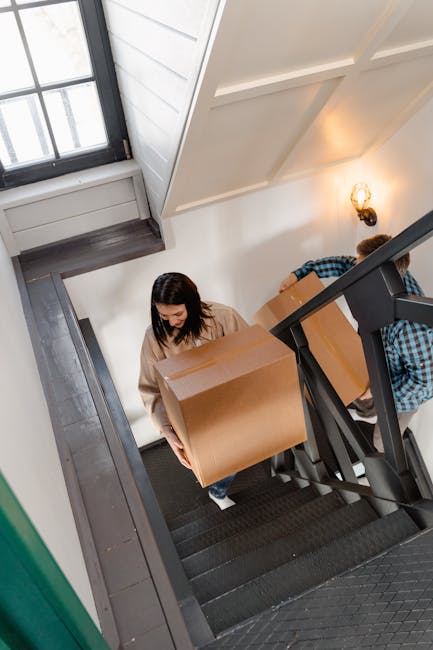
- Use the right number of people. One person may steady while another carries. For some items, two people is enough; for others, more coordination is needed than strength.
- Pause at the awkward points. Landings, low ceilings, and door frames are where mistakes happen. Stop, reset grip, and communicate.
- Reassess when something feels wrong. If the item keeps snagging or the route feels unsafe, stop and switch approach. That is not failure. That is sensible.
If the item is especially delicate or expensive, it is worth reading about the risks of moving specialised pieces yourself, such as in why DIY piano moving can go badly wrong. The same basic principle applies to other awkward items too: heavy plus narrow access is a combination that deserves respect.
Expert Tips for Better Results
Over time, the little decisions make the biggest difference. Here are the tips that save time, energy, and quite a lot of swearing under your breath.
Take the item apart before you force it through
If a bed, table, or shelving unit can be dismantled, dismantle it. It is often faster in the end, and much less likely to leave a scar on the wall. Keep screws, fittings, and brackets in labelled bags. One tiny bag can save twenty minutes later. Simple, but very useful.
Clear the stairwell completely
Remove coats, shoes, umbrellas, and anything else from the hallway. A narrow staircase becomes even narrower when clutter creeps in. Leave a clean path from the room to the front door. That also helps the team communicate without tripping over the family's half-finished life at the bottom of the stairs.
Use the right wrapping
Soft furnishings benefit from covers, while hard surfaces need blankets or corner protection. For upholstered pieces, it can help to read sofa care and protection tips before the move, especially if the fabric is light or the item is going into storage afterwards.
Work with the shape, not against it
Sometimes furniture fits when turned diagonally. Sometimes it only works if tilted. Sometimes the safest answer is "not this way." The best movers judge the angle rather than brute-forcing the carry. There is no prize for forcing a sofa where a sofa plainly does not want to go.
Keep one person communicating clearly
On tight stairs, too many voices can make things worse. Choose one lead call-out voice and keep the instructions short: "Stop." "Tilt." "Left." "Breathe." That last one is not a technical term, obviously, but it helps.
Allow extra time for flats with shared access
Common entrances, parking restrictions, and shared hallways can all slow things down. Build that into your plan rather than trying to rush later. A move that starts calm usually ends calm too.
Common Mistakes to Avoid
Most stair-related moving problems are preventable. A few habits keep repeating, though, and they are worth calling out plainly.
- Not measuring properly: "It should fit" is not a measurement.
- Trying to carry too much at once: One oversized box on a narrow staircase is asking for trouble.
- Forgetting to protect corners: Bannisters and walls almost always lose that battle.
- Rushing the turn: Corners are where items snag and people twist awkwardly.
- Using poor lifting posture: If you need a reminder on safer lifting mechanics, the practical guidance in lifting heavy items efficiently is worth a look.
- Underestimating weight distribution: A light-looking item can still be top-heavy or unstable.
- Ignoring the route from van to flat: The problem is not only the stairs; it is the whole journey.
- Trying to "make it fit" by forcing bends: Some items tolerate a small amount of flex. Others do not. Know the difference.
A quick example: a resident in a Hayes flat may try to move a three-seater sofa upstairs without checking the turn at the first landing. Halfway through, the sofa catches on the wall, and now one person is pushing, one is pulling, and nobody is really in charge. That is the moment to stop, not keep going. A better plan would have been to measure first, remove feet if possible, and decide whether the staircase was suitable at all.
Tools, Resources and Recommendations
You do not need a warehouse full of kit, but a few sensible tools make a big difference.
- Measuring tape: Essential for stair width, landings, and furniture dimensions.
- Furniture blankets: Good for protecting wood, paint, and upholstery.
- Stretch wrap: Useful for keeping drawers closed and protecting loose parts.
- Gloves with grip: Better control, less slipping.
- Furniture sliders or dollies: Helpful for moving items to and from the staircase, though not always suitable on stairs themselves.
- Clear labels and bags for fixings: Saves time during reassembly.
- Floor protection: Especially useful in hallways, communal entrances, and newly decorated properties.
It also helps to read up on packing and decluttering before moving day. A good starting point is the ultimate packing checklist, especially if you are trying to keep boxes manageable in a narrow stairwell. If you have items you do not need immediately, storage options in Hayes can reduce pressure on the staircase by letting you stage the move in phases.
If you are handling a complete flat move rather than a single item, it may be helpful to review flat removals in Hayes and furniture removals in Hayes to understand how a more structured service approach can reduce the awkward bits. That is especially true for busy streets, tight access, or older blocks where parking is not exactly generous.
Law, Compliance, Standards, or Best Practice
For moving in flats, compliance is usually less about one dramatic rule and more about sensible practice. In the UK, the safe handling of items should align with general health and safety expectations, proper manual handling, and reasonable care for the property being used. That means not overloading individuals, not taking unnecessary risks, and not turning shared spaces into hazards.
Good practice also includes checking lease or building rules where relevant. Some blocks have loading restrictions, lift booking procedures, or requirements about protecting communal areas. Others expect quiet hours or advance notice for larger moves. Even when the building rules are informal, it is wise to follow them. It keeps the day smooth and avoids that awkward knock on the door from a neighbour who is less than delighted.
Professional movers should also work with appropriate insurance and safety procedures. If a company is being considered, it is sensible to review how it handles safety, handling, and liability. You can learn more about this approach through the company's own insurance and safety information and health and safety policy. It is also worth understanding booking terms and payment expectations in advance, which helps reduce misunderstandings later.
Best practice, in plain English, is simple: protect people, protect property, and do not force a move through access that clearly is not suitable. That is good moving etiquette, and good sense.
Options, Methods, or Comparison Table
When narrow stairs are involved, there are usually a few ways to handle the move. The right method depends on the item, the stairwell, and how much time you have.
| Method | Best for | Pros | Limitations |
|---|---|---|---|
| DIY carry with friends | Small, manageable items | Low upfront cost, flexible timing | Higher risk of injury, damage, and poor coordination |
| Partial dismantling | Beds, wardrobes, tables, modular furniture | Improves fit and reduces snagging | Requires tools, time, and good labelling |
| Professional stair carry | Heavy or awkward items that still fit | Safer handling and better control | May still be unsuitable for very tight access |
| Storage first, move later | Moves with timing pressure or access issues | Reduces stress and allows staged moving | Extra logistics and possible added cost |
| Specialist handling | Very valuable, fragile, or unusually heavy items | Best control and lower risk | Not always necessary for standard furniture |
For many Hayes flat moves, the best choice is a mix of methods. You might dismantle the bed, carry the sofa as a team, and store the desk temporarily because the staircase is too tight. Practical, not perfect. And that is usually enough.
Case Study or Real-World Example
Here is a realistic scenario. A couple moving out of a two-bedroom flat near central Hayes had a narrow internal staircase with one sharp turn and a low ceiling above the landing. Their biggest problems were a sofa, a bed base, and a large fridge freezer.
At first, they planned to move everything in one day by doing the heavy lifting themselves. Once they measured the stairs, though, they realised the fridge would be tight and the bed base would not turn cleanly without damage. So they changed the plan. The bed was dismantled fully. The sofa feet were removed and the fabric protected. The fridge was checked against the route and moved last, once the landing was clear and the team had more room to manoeuvre.
The result was not dramatic. In fact, that was the point. No scraped banister. No panicked shouts. No dragging on the staircase carpet. The move took a bit longer than the couple first imagined, but it was much smoother and far less stressful. One of them later said the best decision was simply stopping to measure before starting. Hard to argue with that.
If you are also trying to keep moving day calm rather than chaotic, it may help to read how to create a stress-free moving experience and how decluttering helps you transition to a new home. Less clutter usually means fewer staircase battles. Funny how that works.
Practical Checklist
Use this checklist before moving anything through narrow stairs in a Hayes flat:
- Measure the staircase, landings, and door frames
- Measure each item, including handles, feet, and protrusions
- Decide what can be dismantled
- Empty drawers and remove loose contents
- Pack heavy items into smaller boxes
- Protect walls, corners, rails, and floors
- Assign one clear lead communicator
- Confirm parking and access arrangements in advance
- Check whether anything needs storage or temporary staging
- Keep tools, tape, and fixings in one labelled kit
- Plan the order of items so the staircase stays as clear as possible
- Stop and reassess if an item starts snagging or tipping
If you are dealing with more than one bulky item, a separate plan for sofas, fridges, and beds can be very helpful. The article on bulky item collection in Hayes is a good companion piece for those awkward bigger pieces that seem to have a personality of their own.
Quick expert summary: narrow stairs are not a problem to "push through"; they are a route problem to solve. Measure first, reduce bulk where possible, protect the property, and choose the method that keeps both people and belongings safe. That simple shift in mindset saves more hassle than most people expect.
For local moves that need extra flexibility, it can also help to look at man with a van support in Hayes, man and van services, or broader removal services in Hayes depending on how much you need moved and how awkward the access is.
Conclusion
Narrow stairs in Hayes flats can make moving feel harder than it should be, but they do not have to turn the day into a disaster. With proper measurement, sensible dismantling, protective wrapping, and a calm lifting plan, most moves become manageable. The key is to respect the access rather than fighting it.
Sometimes the safest solution is a careful stair carry. Sometimes it is storage. Sometimes it is bringing in a professional team that knows how to handle tight turns without drama. Whatever the route, the goal is the same: move your belongings without damaging the flat, the furniture, or yourself.
If you are still weighing up the best approach, take the time to plan properly. A few extra minutes with a tape measure can spare you a long afternoon of regret. And let's face it, nobody wants to be the person nudging a wardrobe upstairs at 7pm with one shoe off and a flat pack instruction sheet stuck to their arm.
Get a free quote today and see how much you can save.
Sometimes the smartest move is the one that keeps everyone safe and lets you breathe again once the last box is in place.


